Resaltar:
Reactivo de alta pureza
, Reactivo analítico puro
, Reactivo muy soluble en agua
HEPES 7365-45-9: Selección de tampón en estudios de enzimología a baja temperatura
En los experimentos de ciencias de la vida, la selección deamortiguadores biológicosEn general, los resultados de los experimentos son muy difíciles de reproducir.Los sistemas tampón se aplican en condiciones establecidas a temperatura ambiente o superior para alinearse con el rango óptimo de pH de las enzimas.Sin embargo, cuando las condiciones experimentales cambian a bajas temperaturas, el rendimiento de muchos amortiguadores tradicionales puede presentar fluctuaciones significativas.que conduce a una reducción de la estabilidad del pH y, en consecuencia, afecta la integridad estructural y la actividad funcional de las enzimasEn este contexto, el búfer HEPES se destaca como una solución digna de mención en la investigación de enzimas a baja temperatura debido a su adaptabilidad única a la temperatura.
|
Nombre del producto
|
Ácido 4-hidroxietilpiperazina etanesulfónico
|
Productos químicosA. Nobabreviatura
|
El buffer HEPES
|
|
El CASNoel ombrero
|
No incluye:
|
PRodoctoA. Noapariencia
|
Polvo cristalino blanco
|
|
M.OleocularNoocho
|
238.305
|
M.OleocularF: el precioel ormulá
|
C8H18N2O4S
|
|
Dla seguridad
|
10,07 g/ml a 20 °C
|
M.eltingP- ¿ Qué?
|
234-238 °C
|
|
AlmacenamientoC. LasCondiciones
|
Temperatura ambiente, lejos de la luz y la humedad
|
Pla urgencia
|
Más del 99%
|
|
El Sel cañónPAcogimiento
|
500 g/botella, 25 kg/tambor de cartón
|
M.Un fabricante
|
Hubei Xindesheng
|
Requisitos especiales para los agentes amortiguadores en experimentos a baja temperatura
Experimentos bioquímicos en condiciones de baja temperatura, tales como estudios de cinética enzimática, purificación de proteínas o técnicas de conservación a baja temperatura.Requieren sistemas de amortiguación que no solo mantengan la estabilidad dentro de un rango de pH específicoAlgunos agentes amortiguadores comúnmente utilizados experimentan cambios significativos en sus constantes de disociación cuando la temperatura disminuye,que conduce a un cambio en el ambiente de pH predeterminadoEsto puede alterar la conformación natural de la enzima, reducir su eficiencia catalítica e incluso causar desnaturalización.mantener un pH relativamente constante durante los cambios de temperatura, se ha convertido en un paso clave en el diseño de experimentos a baja temperatura.

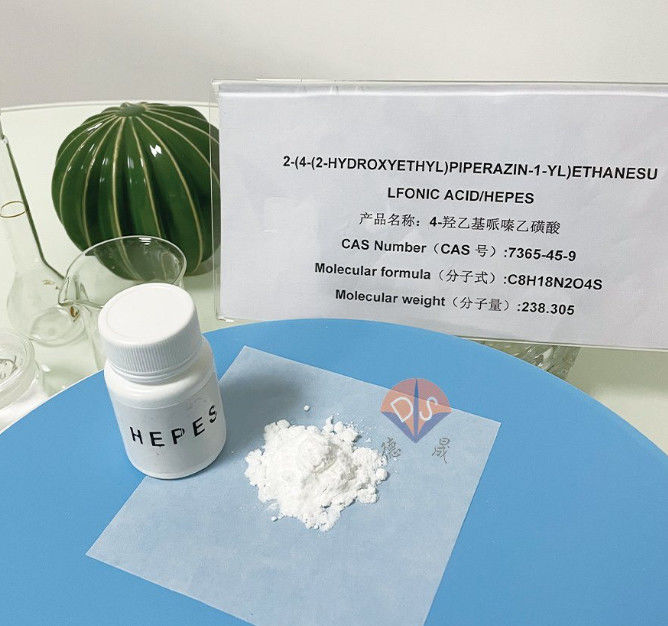
HEPES en polvo
La ventaja de la estabilidad a temperatura de la solución tampón HEPES
El HEPES es un amortiguador zwitteriónico con un rango de amortiguamiento efectivo típicamente entre el pH 6,8 y 8.2, ampliamente utilizado en cultivos celulares, análisis bioquímico y experimentos de biología molecular.una característica destacada de HEPES es que su constante de disociación varía menos con la temperaturaEsto significa que el tampón HEPES puede mantener un ambiente de pH relativamente estable tanto a temperatura ambiente como a baja temperatura, proporcionando un medio de reacción suave y continuo para las enzimas.
El valor de aplicación en la enzimología a baja temperatura
En la investigación enzimática a baja temperatura, la aplicación de amortiguador HEPES puede apoyar el mantenimiento de la estructura enzimática y el funcionamiento normal.en algunos experimentos que requieren un tratamiento a baja temperatura de las enzimas para estudiar su estabilidad térmica o mecanismo de plegamiento, HEPES proporciona un entorno de amortiguamiento confiable, evitando los factores de interferencia introducidos debido a la falla del sistema de amortiguamiento.Las bajas propiedades de unión de iones metálicos del HEPES también reducen la unión competitiva con los centros activos de enzimas, asegurando aún más la integridad funcional de la enzima.
Sugerencias de uso en experimentos
Para aprovechar plenamente las ventajas del HEPES en condiciones de baja temperatura, it is recommended to accurately prepare the buffer solution before the experiment and use a calibrated pH meter to adjust the pH at the experimental temperature to correct for any minor effects that may be caused by temperatureAl mismo tiempo,la optimización de la concentración y la resistencia iónica de la solución tampón en función de las características específicas de las enzimas y los requisitos experimentales puede mejorar aún más los resultados experimentalesCabe señalar que el tampón HEPES debe evitar la coexistencia con oxidantes fuertes o agentes reductores y almacenarse en condiciones adecuadas para mantener su estabilidad a largo plazo.
El S- ¿Qué quieres?
En resumen, el amortiguador HEPES ha demostrado un valor significativo en la investigación enzimática a baja temperatura debido a su estabilidad del pH bajo cambios de temperatura.El HEPES puede mantener mejor la estructura y la función de las enzimas en ambientes de baja temperaturaEn la futura exploración de la biotecnología a baja temperatura, la biotecnología a baja temperatura se ha convertido en una de las áreas de investigación más importantes del mundo.Se espera que el HEPES siga desempeñando su papel único en la promoción del desarrollo y la innovación de la investigación científica.
Embalaje del producto
Como unEl buffer HEPESComo fabricante, Desheng supervisa estrictamente la calidad del producto y establece un departamento de calidad para inspeccionar lotes de productos.Sólo después de que el embalaje y la calidad cumplan con los estándares pueden ser vendidos desde la fábricaPor lo tanto, Desheng ha recibido elogios unánimes de los clientes.


 ¡Su mensaje debe tener entre 20 y 3.000 caracteres!